When Sportswear Meant Something: From 80s Status to Gen Z Style
Growing Up When the Logo Really Mattered
There was a time when wearing the right sportswear meant something very different.
I grew up in Old Trafford, Manchester, and came from a low-income family. I was fortunate enough to pass the 11-plus and attend a boys' grammar school.
Several boys from my junior school in Old Trafford made that journey with me. We didn't come from affluent backgrounds. We were simply kids who had passed an exam and had been given an opportunity.
Arriving at grammar school opened my eyes to something else.
Not everybody there was wealthy, but many families clearly had more disposable income than ours.
And in the 1980s, you could sometimes see that difference in what people wore.
When Kappa and FILA Felt Almost Unreachable
Today we are surrounded by sportswear.
Scroll through TikTok or Instagram and you can see hundreds of brands within minutes. Fast fashion can recreate a look almost immediately. Trainers arrive in endless colourways and collaborations.
The 1980s felt very different.
Brands such as FILA, Kappa, Sergio Tacchini, adidas, Nike, Reebok and Diadora carried an aura.
If somebody arrived wearing a particularly desirable branded tracksuit top, trainers or tracksuit bottoms, people noticed.
For teenagers like us, many of those products simply felt out of reach.
That scarcity was part of their power.
You didn't have ten branded outfits hanging in your wardrobe.
Sometimes you desperately wanted one.
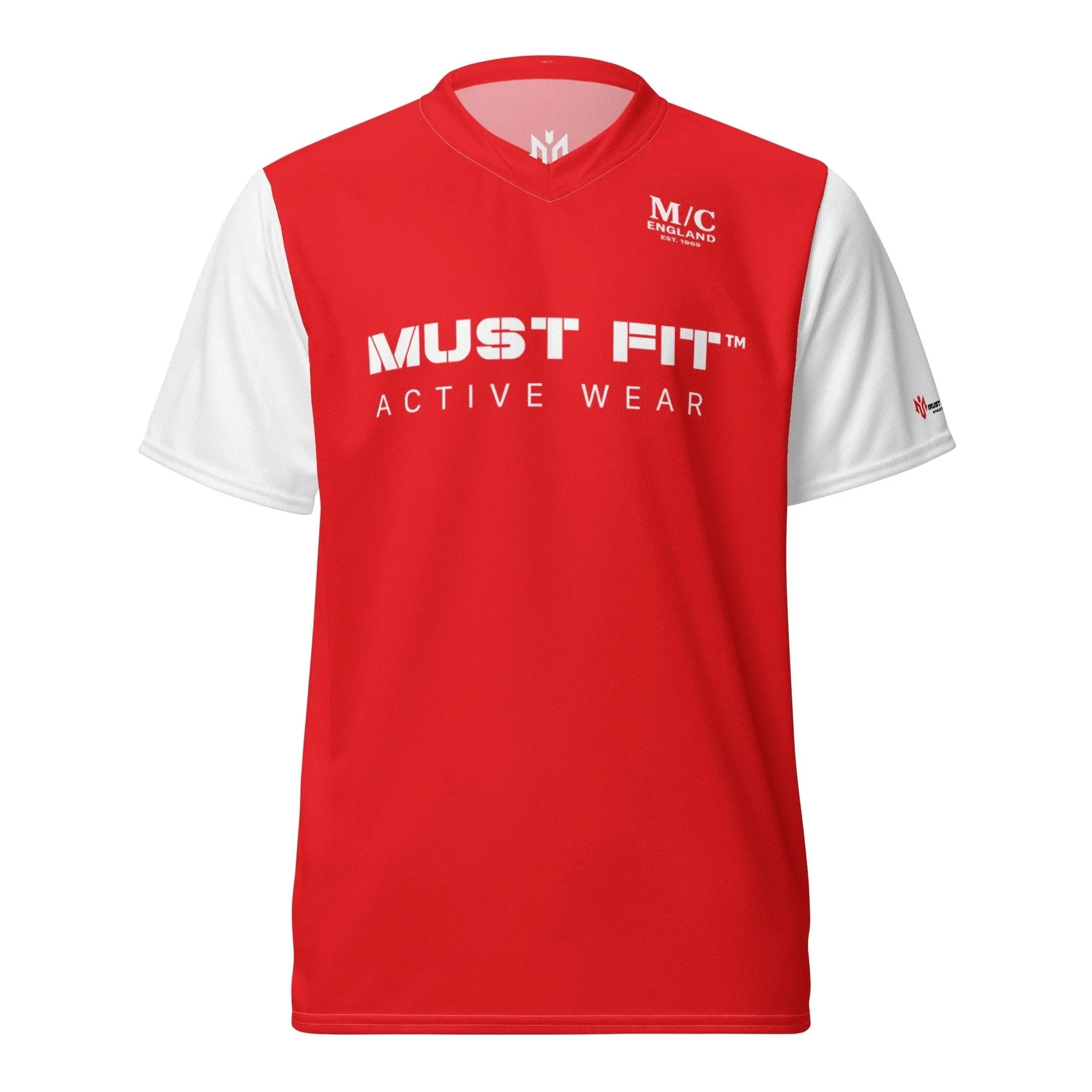
M.U.S.T. Fit® Sports Recycled unisex sports jersey
My First Branded Trainers Were Hi-Tec
My first real memory of owning branded trainers was Hi-Tec, probably when I was around 14.
They were affordable enough to give me an entry into branded sportswear.
But here's the interesting thing.
Nobody particularly noticed them.
They didn't carry the status of some of the more expensive brands.
That taught me something about branding before I even understood what branding was.
Two products could perform essentially the same basic job, but the name on one could make a teenager feel completely different wearing it.
That wasn't about fabric specifications.
It was about identity.
The FILA Tracksuit Bottoms I Sold Before I'd Paid For Them
One memory probably explains the value we attached to sportswear better than anything else.
Somewhere between the ages of 14 and 16, I managed to get hold of a pair of FILA tracksuit bottoms.
I had agreed to buy them from somebody, but incredibly, I got the bottoms before I'd actually paid him.
Then somebody else wanted them.
So within days, I sold them to the other person for more than I'd agreed to pay for them.
I received the cash from my buyer, paid the original seller and kept the difference.
Looking back, it was almost a teenage credit transaction.
I certainly didn't call it entrepreneurship at the time.
I just knew somebody wanted those FILA bottoms badly enough to pay more than I'd agreed to pay for them.
But think about what that says about the brand.
The product had value before I'd even finished buying it.
That's brand desirability.
Then Came My adidas Gazelles
At around 16, things changed.
I had started working part-time and suddenly had something I hadn't really had before:
my own money.
I saved it.
And eventually I bought a pair of light blue adidas Gazelle trainers.
I can still remember how good owning those trainers made me feel.
That's important.
It wasn't simply:
I bought some shoes.
I'd worked.
I'd saved.
I'd waited.
And then I'd bought something that previously felt beyond my reach.
The Gazelles represented something.
Perhaps that's why certain products remain in our memories decades later.
Why adidas and Nike Survived
The fascinating thing about looking back at that period is seeing what happened next.
Some brands managed to cross generations.
adidas and Nike are the obvious examples.
They were desirable when I was young, remained relevant through the decades that followed and are still worn by teenagers today.
The styles changed.
The athletes changed.
Football changed.
Music changed.
Streetwear changed.
And eventually social media changed almost everything about how fashion trends spread.
Yet those brands kept finding ways of making the next generation want them.
That's extraordinary brand management.
But What Happened to Some of the Others?
This is the question that fascinates me.
What happened to HEAD?
What happened to Diadora?
And what changed for some of the other brands that once seemed so aspirational?
They haven't necessarily disappeared. Diadora, for example, continues to operate internationally, and HEAD remains a major sporting-goods company, particularly in racquet and winter sports.
But their position within mainstream British youth fashion isn't what I remember from the 1980s.
That's an important distinction.
A company can still exist.
A product can still be excellent.
A brand can still have history.
But cultural relevance can move somewhere else.
And that's perhaps one of the biggest lessons I've taken from watching sportswear for more than four decades.
Price Alone Doesn't Create Desire
Back then, high prices actually contributed to the mystique of certain brands.
If few people could afford something, seeing somebody wearing it made it more noticeable.
But I'm not convinced that model works in quite the same way today.
Gen Z has grown up with almost unlimited choice.
They can discover a tiny independent label on TikTok tonight and be wearing it next week.
They mix expensive trainers with inexpensive tees.
Vintage can sit alongside something brand new.
Football shirts become streetwear.
A £20 item can suddenly become culturally relevant while something costing £200 gets ignored.
Price and desirability are no longer the same thing.
What Gen Z Has Changed
This is where I think today's generation is particularly interesting.
Gen Z didn't destroy branding.
They changed the rules.
The logo still matters.
But increasingly, so do the story, aesthetic, community, individuality and authenticity behind it.
Young consumers can spot an obvious corporate sales message almost immediately.
They don't necessarily want to be told:
“This is expensive, therefore you should want it.”
They decide for themselves what's cool.
And social media has given them enormous power in making that decision.
One video can introduce millions of people to something they'd never previously heard of.
One photograph can revive a trainer from decades ago.
One celebrity can resurrect a forgotten style.
And sometimes the internet simply decides that something is cool again.
That's Where M.U.S.T. Fit® Sports Comes In
All those experiences have influenced the way I think about M.U.S.T. Fit® Sports today.
I'm not trying to recreate the 1980s.
And I'm certainly not suggesting that a new independent brand can manufacture decades of heritage overnight.
What I do believe is that there is a lesson worth carrying forward:
clothing should make you feel something.
My Hi-Tecs were my entry point.
Those FILA bottoms taught me about desirability.
My light blue Gazelles taught me what it felt like to work, save and finally own something I'd genuinely wanted.
And watching brands rise, fall, reinvent themselves and sometimes return has taught me something else.
Never assume today's popularity guarantees tomorrow's relevance.
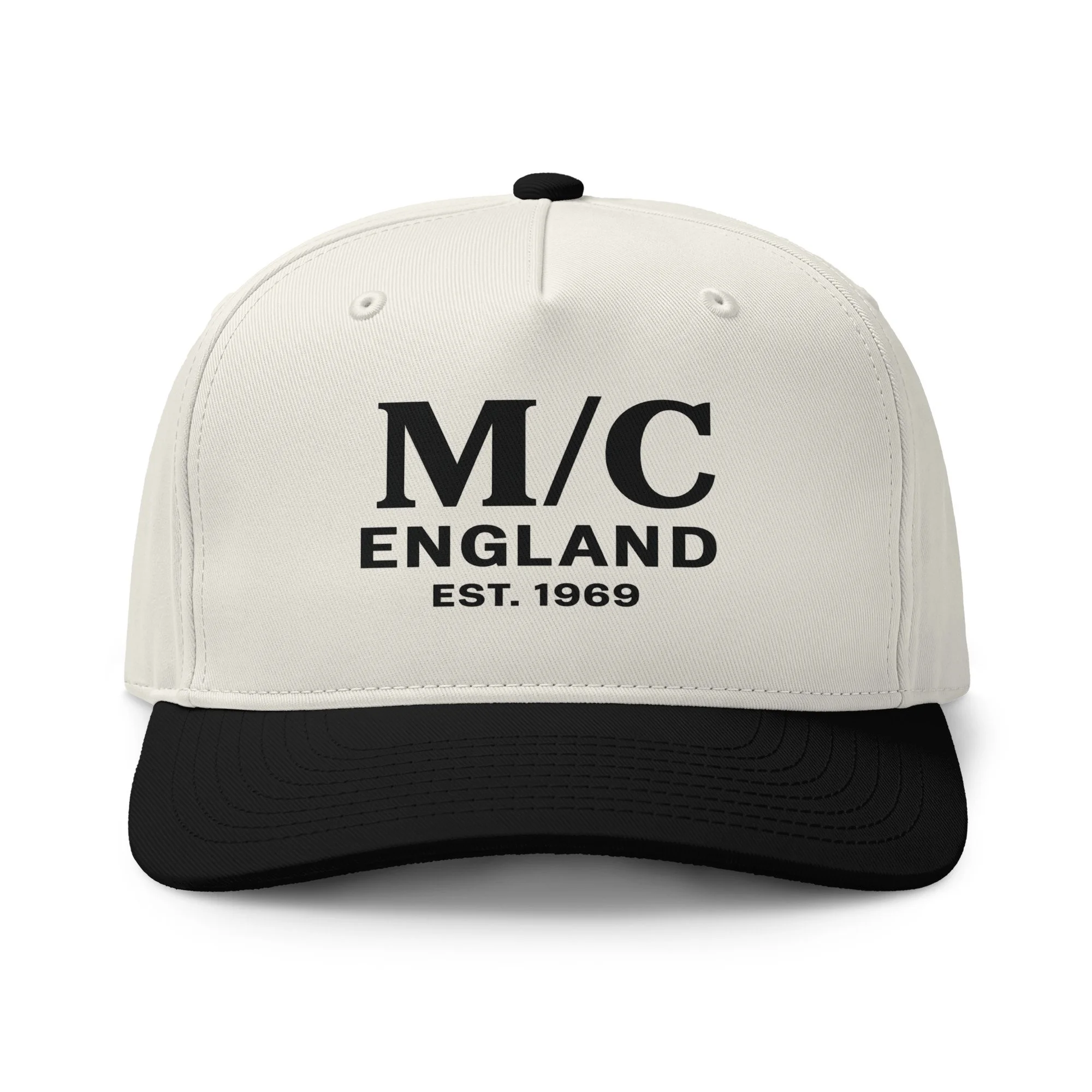
M.U.S.T. Fit® Sports Class two-tone cap
High Quality Shouldn't Mean Out of Reach
That's one of the principles I want M.U.S.T. Fit® Sports to grow around.
Good quality at an affordable price.
Not cheap for the sake of being cheap.
Not expensive simply to manufacture status.
I want someone to discover a M.U.S.T. Fit® tee, hoodie, jersey, jacket or cap and think:
I like that. I can actually wear that. And I can afford it.
Because I remember being the teenager looking at brands I wanted but couldn't realistically buy.
That memory hasn't disappeared.
From Old Trafford to a New Generation
There's a strange full circle to all of this.
A teenager growing up in Old Trafford in the 1980s, fascinated by the brands he couldn't always afford, eventually creates his own independent sportswear brand decades later.
I couldn't have predicted that.
But perhaps the connection was there much earlier than I realised.
Sportswear taught me about aspiration.
It taught me about status.
It taught me about affordability.
It taught me that a logo can mean far more than the material it's printed or stitched onto.
And now Gen Z is teaching brands another lesson:
you don't get to decide you're relevant. The customer decides.
That's the challenge for M.U.S.T. Fit® Sports.
Not to become another Nike.
Not to imitate adidas.
Not to recreate FILA or Kappa in the 1980s.
But to take the lessons those brands taught me and build something for today.
Something independent.
Something accessible.
Something people actually want to wear.
And perhaps, somewhere out there, there's a 14-year-old getting their first piece of branded sportswear today who will still remember how it made them feel when they're in their fifties.
Because sometimes it's never just a pair of trainers.
M.U.S.T. Fit® Sports
Wear What Moves You.
UK Born. Globally Worn.